
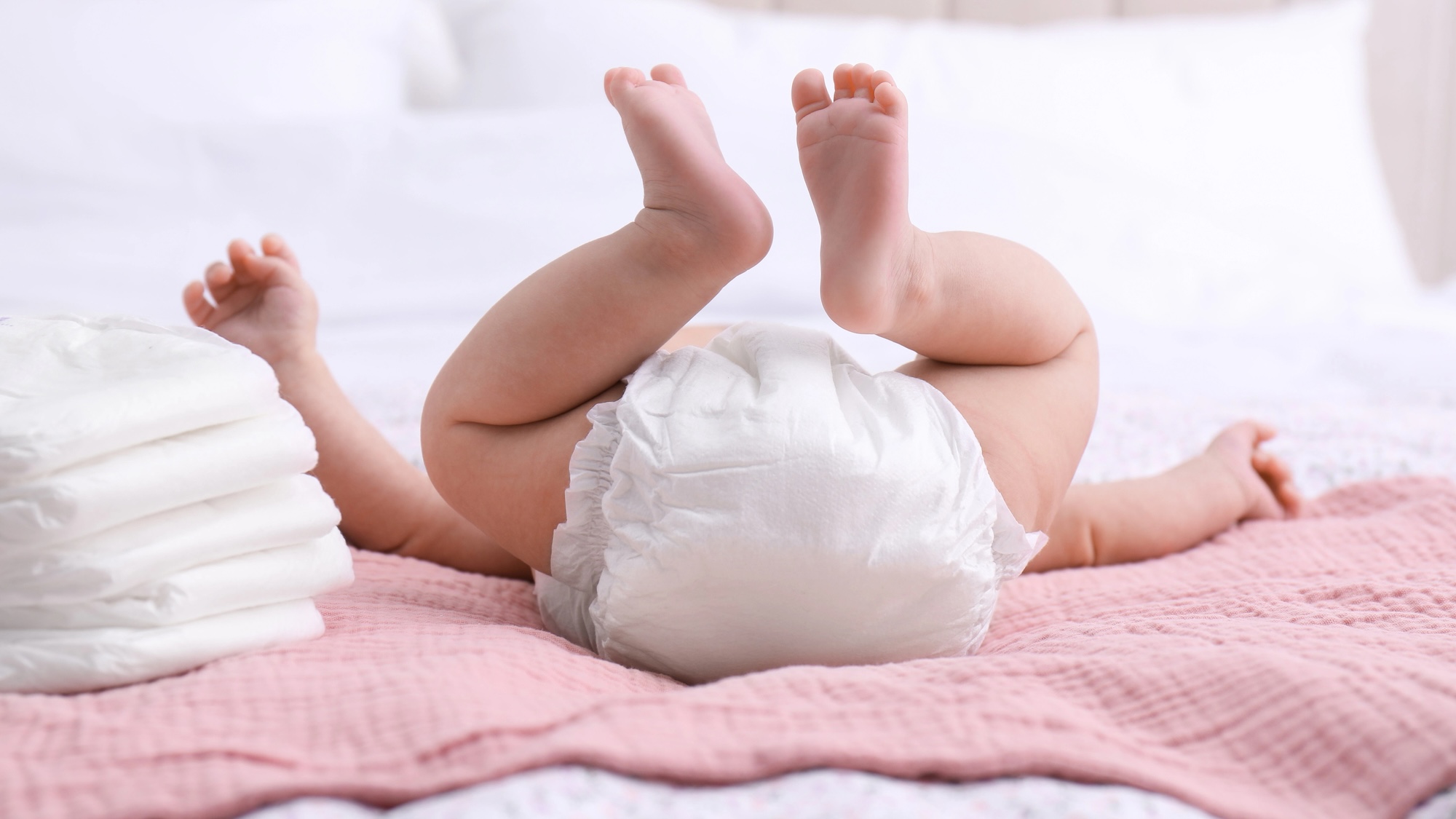
Earth has a big diaper problem. Families in the United States toss out over 1 trillion of the soiled garments every year, making it the third most common consumer product piling up in landfills. They also aren’t going anywhere anytime soon. Thanks to their plastic polymer components, most diapers take upwards of 500 years to fully decompose.
As far as a solution to our big number two problem, there are two main lines of thinking. On one hand, it’s important to promote the development and use of reusable alternatives made with eco-friendly materials. At the same time, it’s vital to find ways to recycle existing disposable diapers. While there have been promising strides in both areas over the last few years, engineers in Japan say they now have an even more efficient method for getting the most out of dirty diapers. According to AFP, it’s even got the support of Unicharm, one of Japan’s leading hygiene product manufacturers.
The new technique is piggybacking on a strategy that’s already proven successful in the southern Japanese municipalities of Shibushi and Osaki. About 25 years ago, the region’s roughly 40,000 residents realized that their local landfill was quickly running out of space. After dramatically expanding their recycling, Shibushi and Osaki now only toss about 20 percent of their household waste into the trash. At four times the average Japanese home’s recycling rate, experts now say the municipalities’ nearby landfill can remain open for another 40 years.
In 2024, Shibushi and Osaki included dirty diapers in their recycling program. Once collected, the materials are cleaned, shredded, and separated into its principal components of plastic, fabric pulp, and super-absorbent polymer (SAP). Unicharm could already turn these materials into other hygienic products like toilet paper, but a new ozone treatment designed to bleach, sterilize, and deodorize the pulp is widening the possibilities even further. Meanwhile, the company is finalizing a method to incorporate the SAP and plastic waste into new diapers that it aims to roll out by 2028.
Although its recycled products are only available in a handful of test markets and cost about 10 percent more than standard options, they may be able to cut down on production’s water requirements. Unicharm also hopes to integrate their diaper program with 20 municipalities within the next decade.
While it’s true that soiled diapers are an issue around the world, they are particularly problematic in Japan. The nation is home to the world’s oldest average population, with an estimated 10 percent of residents over the age of 80.
“Demand for baby diapers is falling. But a growing number of elderly people wear diapers, and more recently, even pets do too,” Unicharm president Takahisa Takahara explained in a recent interview. “If we can transform the sense of guilt ordinary consumers may feel about using disposable products into something positive, and make using recycled products the norm in society, it will become economically viable.”
The post Japan makes breakthrough in dirty diaper recycling appeared first on Popular Science.